
Airbnb’s Strategy: A Throwback to Basic

Airbnb is redirecting its focus toward private rooms, emphasizing affordability and nostalgia as travel costs rise.
CEO Brian Chesky acknowledged that some of their recent offerings have drifted from the platform’s original promise of affordable, shared stays. By amplifying “good value” options like private rooms, Airbnb aims to reestablish its price advantage over traditional hotels.
In this blog we disect Airbnb's current standing, other hospitality competitors to "traditional" hotels and what strategic framework you can apply to gain your standing in the market.

Competitive Landscape: Players to Watch
Here’s a look at several key competitors—both established and emerging—shaping the hospitality landscape alongside Airbnb:
Budget-Friendly Alternatives
Hostels & Shared Accommodations: Traditional and boutique hostels continue to appeal to price-conscious and socially motivated travelers seeking community experiences.
Extended-Stay and Economy Hotel Chains: Brands like Motel 6, ibis, and Premier Inn offer dependable, low-cost stays—maintaining a strong hold on value-driven segments.
Tech-Savvy Disruptors
All-In-One Booking Platforms: Websites and apps such as Booking.com and Expedia now integrate hotels, short-term rentals, and alternative stays—creating a one-stop-shop for diverse traveler preferences.
Experiential Brands: Companies like Selina blend co-working, local immersion, and affordable lodging to cater to digital nomads and Gen Z travelers.
Luxury & Hybrid Innovators
Upscale Hotels and Resorts: Brands like Marriott and Hyatt remain competitive due to service excellence and loyalty programs—even as price-sensitive options proliferate.
Alternative Luxury Rentals: Platforms like Plum Guide offer curated, high-end rentals that combine the comfort of hotels with the character of home.
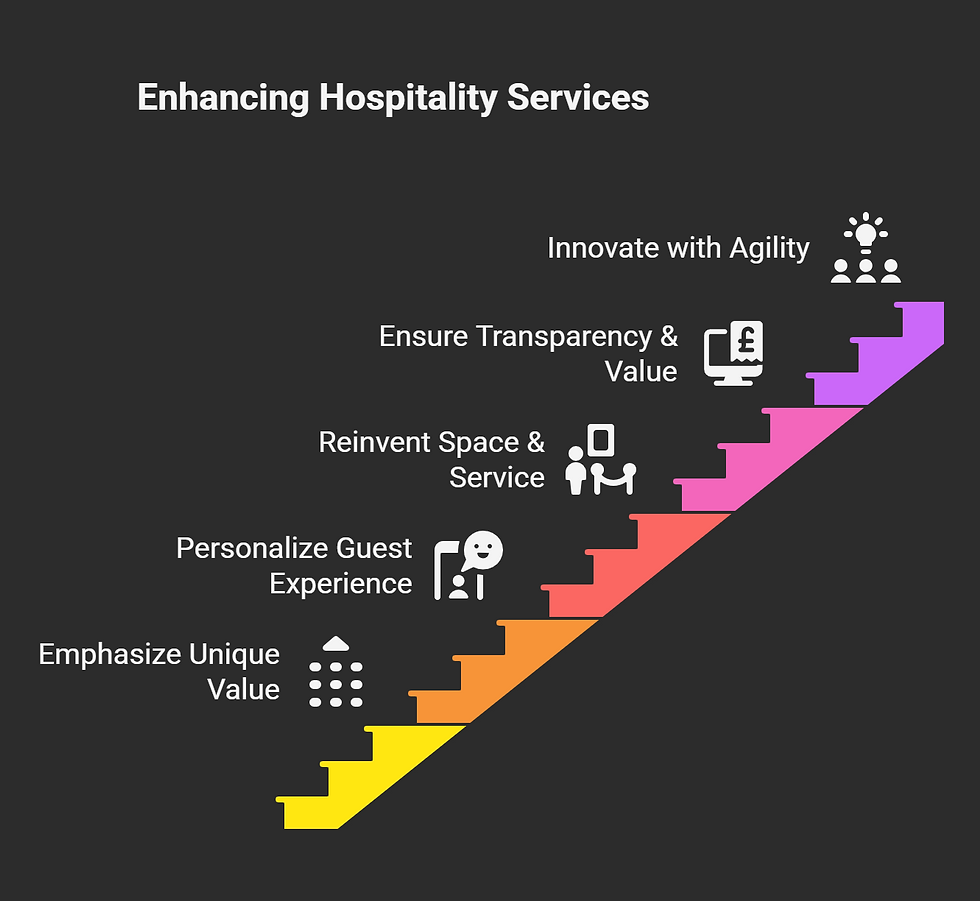
Strategic Playbook for Hospitality Brands
To maintain and grow competitiveness, hotels must evolve in response to shifting dynamics. Here’s how:
1. Emphasize Unique Value—Beyond Just Price
Differentiate through Experience: Provide standout services—local guides, immersive cultural touchpoints, or boutique designs—to elevate your offerings.
Promote Flexible Pricing: Introduce tiered options or “smart pricing” strategies that emphasize both value and exclusivity.
2. Elevate The Guest Experience with Personalization
Leverage Data and AI Tools: Adopt AI-powered chat support, seamless booking interfaces, and AI persona tools to offer instant, tailored guest assistance.
Reward Loyalty Creatively: Offer curated experiences, not just discounts—such as local-only perks, surprise upgrades, or wellness-oriented add-ons.
3. Reinvent Space & Service
Hybrid Hospitality Models: Reimagine underused spaces as pop-up coworking hubs, wellness retreats, or community lounges to serve evolving guest needs.
Collaborate with Local Ecosystems: Partner with neighborhood businesses for dining, wellness, and cultural offerings to build authentic experiences.
4. Reassure with Transparency & Value
Communicate Cost-Effectively: Make pricing and cancellation policies crystal clear—no hidden fees—and highlight cost-saving bundles.
Lean Into Local Authenticity: Promote local sourcing, community engagement, and staff storytelling to foster trust and meaningful value.
5. Innovate with Agility
Experiment with New Options: Try limited-time, lower-cost room categories or “flex-stay” packages promoted through social media or loyalty channels.
Foster Real-Time Feedback Loops: Use guest surveys, social listening, and staff input to adjust offerings quickly and responsively.
What This Means for Your Brand
Strategic Area | Competitive Insight | Your Opportunity |
Value Proposition | Airbnb returns to affordable roots | Reinforce cost-conscious or unique experiences |
Technology Adoption | AI tools improving automation and personalization | Invest in guest-centric digital solutions |
Experience Innovation | Blurred lines between rentals and hotels | Reimagine spaces and services for flexibility |
Brand Messaging | Authenticity over price alone | Communicate clear, experience-rich value |
Agility & Responsiveness | Fast-changing booking behavior | Stay versatile with real-time service tweaks |

Closing Thoughts
As Airbnb rebrands affordability and tech disruptors rise, traditional hospitality brands must double down on their strengths: personalized experiences, local authenticity, transparent value, and rapid innovation. Those that act with insight and imagination will not just survive, they’ll lead.
Comments